Date 1902! Opal Ring in 18ct Gold
Date 1902! Opal Ring in 18ct Gold
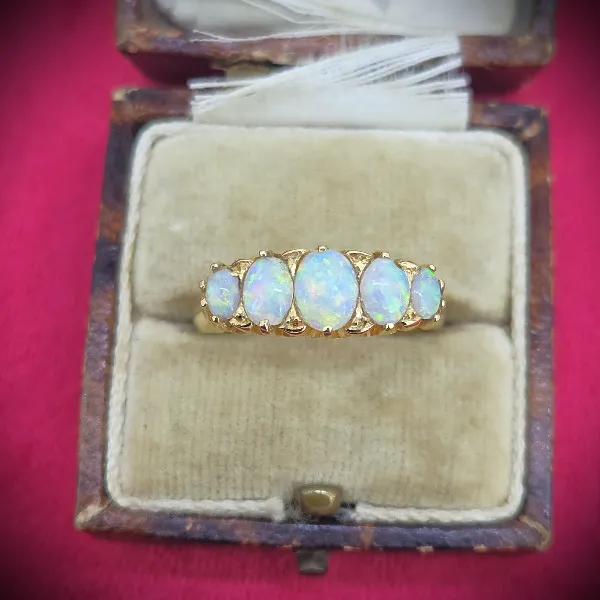
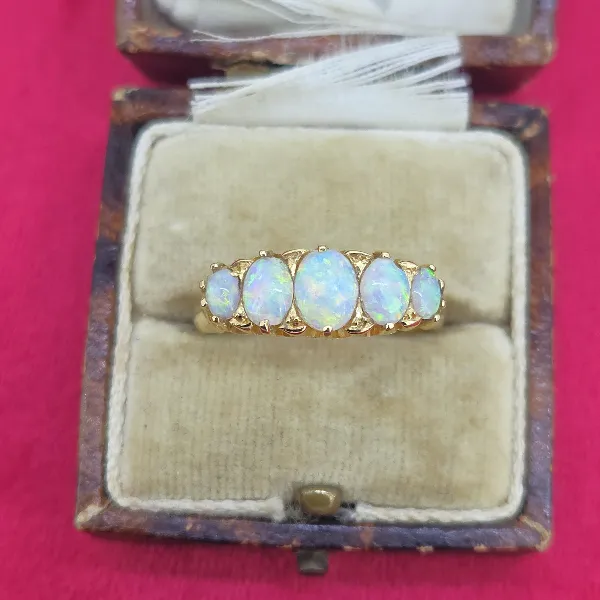
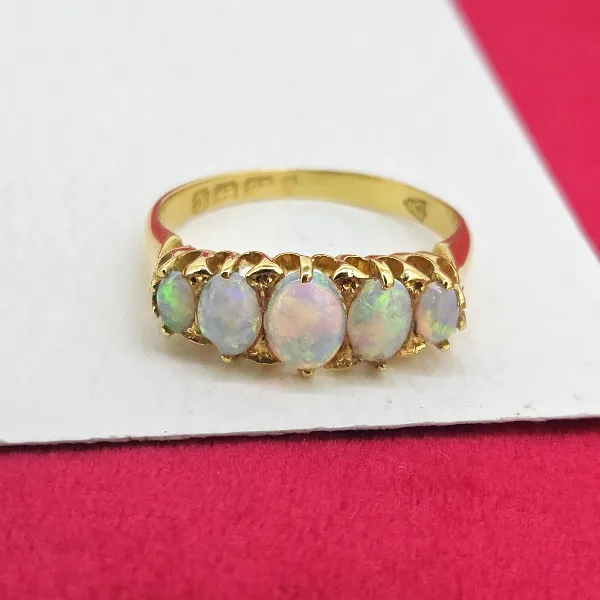
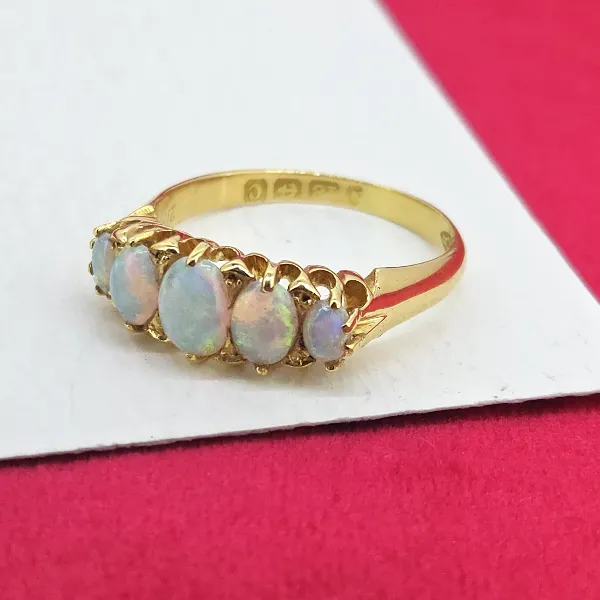
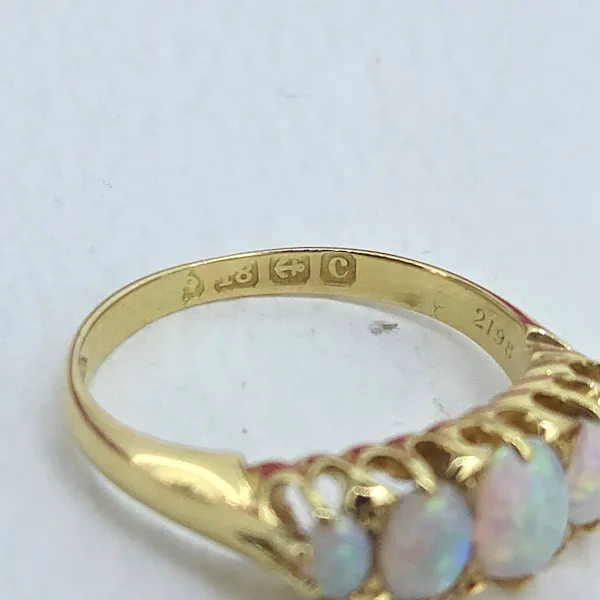
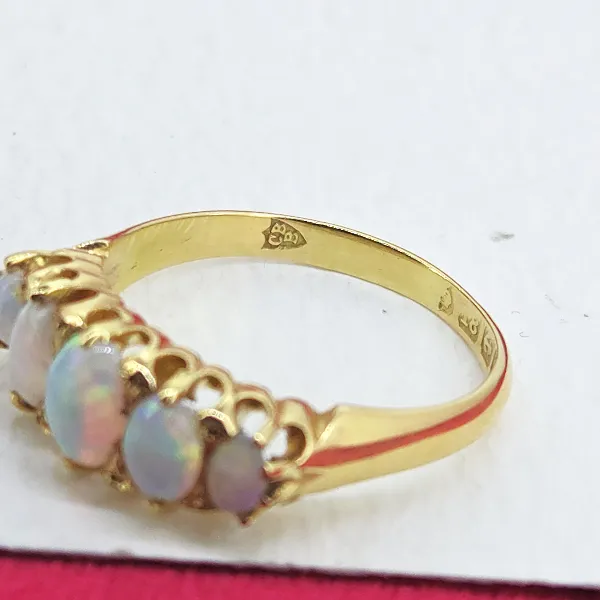
The ring features five natural opals, cut in smooth oval cabochons which is a traditional cut chosen to best display the gemstone’s remarkable play of colour. Each Opal exhibits shifting flashes of green, pink, and blue, a phenomenon unique to Opal caused by the way light interacts with its internal structure. Unlike faceted stones, Opals are graded primarily for brightness, colour play, and pattern rather than clarity or cut precision; the stones in this ring show lively colour and pleasing uniformity.
This ring was hallmarked in Birmingham in 1902 by CBB who we unfortunately can’t find further information on.
This ring weighs 4.6 grams and is currently a Size Q. It is both elegant and comfortable to wear, with a beautifully balanced setting that highlights the natural character of each gemstone.Stylistically, this ring reflects the refined taste of the late Victorian to early Edwardian period, when opals were highly fashionable and often used in romantic and feminine jewellery designs. The open gallery and carefully formed claw setting demonstrate skilled hand craftsmanship, allowing light to reach the stones while keeping them secure.
Antique Opal Rings from this period are increasingly sought after, particularly examples that retain their original hallmarks and well-preserved stones. This piece would suit anyone who appreciates delicate Antique Jewellery, Birthstone Jewellery for October, or rings with soft colour and historic charm.
It can be worn as a dress ring, an alternative engagement ring, or a stacking piece alongside other antique bands. What makes this ring especially special is its combination of genuine Edwardian-era origin, beautiful natural opals, and timeless design. This is a piece that has already endured more than a century and remains as captivating today as when it was
Layaway Today:
We offer a layaway plan for anyone who might prefer to pay by instalments. If you’re interested just call, text or email.
Higher Resolution Images:
If you would like to see some higher quality photos please Click HereSimilar Items:
Ring Sizing:
We will happily size rings to order where possible and try to work to a maximum two week turnaround time (often much faster). We also try to keep costs to the minimum so if we don't need to charge you, we won't! Please note that not all rings can be sized and if they are sized they cannot be returned. All sizings to Treasure Trove rings/Online only rings will incur a fee.Giftwrap:
All items come with a presentation box. In the rare instance that the original box is available this will be included with the piece. We offer gift-wrapping free of charge so please let us know if you would like to avail of this service.Valuations:
Insurance valuation are available on request for items purchased from us that cost over €1,000.Delivery:
In Ireland, each item is shipped via An Post Express Post which is guaranteed next day delivery. This shipping is complementary and fully insured. You will be provided with a tracking number and a signature will be required upon delivery. For mainland Europe we can usually offer delivery within two business days for €12.50. For other destinations please contact usReturns:
Your satisfaction is our priority and if you are in anyway dissatisfied with an item you are free to return for a full refund or credit note within 14 days. No questions asked. Returns are not available on jewellery that we have personalised/amended/resized on your request.Date 1902! Opal Ring in 18ct Gold
( SKU/Item Number )